The day you bring your baby home is unforgettable. Family members are excited. Friends send congratulatory messages. Your camera roll fills up with photos within hours. Then there’s your pet. While everyone else is focused on the newborn, your dog or cat is quietly trying to figure out what just happened.
One day, they’re getting belly rubs, afternoon cuddles, and your full attention. Next, there’s a tiny human taking center stage. Suddenly, the house sounds different, smells different, and follows an entirely new schedule.
It’s no surprise that many pet owners start wondering: “Can pets get jealous of New Babies?“
Signs Your Pet May Be Struggling With the Arrival of a Baby
Not every pet reacts the same way when a newborn enters the family.
Some animals barely seem to notice. Others act as if their entire world has been turned upside down.
The challenge for pet owners is recognizing the difference between normal adjustment and signs of emotional distress. Pets can’t explain what they’re feeling, so they communicate through behavior instead.
Common Jealousy Behaviors in Dogs Around Newborns
Dogs are incredibly observant. They pick up on household changes long before humans realize it.
When a newborn arrives, many dogs notice that walks happen later than usual. Playtime becomes less frequent. The attention they once received throughout the day suddenly shifts elsewhere.
As a result, some dogs begin seeking reassurance in unexpected ways.
You might notice your dog following you from room to room. Some dogs constantly position themselves between their owner and the baby. Others suddenly demand attention during feeding sessions or diaper changes.
A friend of mine experienced this firsthand after bringing home her first child. Her Labrador had always been independent. Within days of the baby’s arrival, he insisted on sitting beside her every time she held the newborn. He wasn’t aggressive. He wanted to be included.
Certain dogs express their frustration differently. Chewed shoes, excessive barking, digging, or ignoring commands can all signal stress. These behaviors often appear to be disobedience, but they usually stem from confusion and insecurity.
Dogs thrive on routine. When their familiar schedule disappears overnight, many struggle to understand why.
How Cats Show Stress, Anxiety, or Attention-Seeking Behaviors
Cats tend to be more subtle when expressing their feelings.
Unlike dogs, they rarely announce their emotions through obvious attention-seeking behaviors. Instead, they often show stress through small changes that are easy to overlook.
A cat that once greeted you at the door may suddenly spend most of the day hiding. Another may become unusually vocal, meowing more often than usual or seeking attention during odd hours.
Some cats react by becoming extra affectionate. Others move in the opposite direction, avoiding interaction altogether.
Veterinarians frequently report litter box issues after major household changes. For cats, inappropriate elimination is often less about disobedience and more about stress.
Picture life from your cat’s perspective. New furniture appears. Strange noises fill the house. Visitors come and go. Familiar routines disappear. It’s a lot to process. Given those changes, a temporary adjustment period is completely understandable.
Why a New Baby Changes Your Pet’s Emotional World
Humans prepare for babies for months in advance. Pets don’t have that luxury. They wake up one day and discover their world has changed.
For many animals, the arrival of a baby affects far more than attention levels.
How Changes in Routine, Attention, and Environment Affect Pets
Routine provides comfort. Your dog knows when breakfast happens. Your cat knows when the house becomes quiet in the evening. Those predictable patterns help animals feel secure. A newborn changes nearly every household routine.
Late-night feedings interrupt sleep schedules. Visitors arrive frequently. Walks may become shorter. Play sessions are often postponed because parents are exhausted.
Even the sounds inside the home are different. Crying, cooing, baby swings, musical toys, and nursery equipment create an environment that pets have never experienced.
Imagine moving to a new country where nobody speaks your language. That’s similar to how some pets experience the first few weeks after a baby arrives. Nothing feels familiar anymore.
The Difference Between Jealousy, Anxiety, Fear, and Resource Guarding
Many owners assume every behavior change means jealousy.
In reality, several emotions can produce similar reactions.
Jealousy often involves competing for attention. A dog nudging your hand while you’re holding the baby is a good example.
Anxiety usually appears as pacing, whining, excessive grooming, or hiding. The pet isn’t competing for attention. They’re feeling uncertain about what’s happening.
Fear can emerge when pets encounter unfamiliar sounds or movements. Some animals need time to learn that crying babies aren’t a threat.
Resource guarding is different. This behavior occurs when a pet becomes protective of food, toys, sleeping areas, or even people. Understanding the root cause matters because each issue requires a slightly different approach.
How to Prepare Your Pet Before the Baby Arrives

Preparation is one of the most effective ways to reduce stress. Waiting until the baby comes home often adjusts harder for everyone involved.
Training and Behavioral Adjustments That Make the Transition Easier
Many professional trainers recommend starting preparation several months before the due date.
Dogs benefit from refreshing basic commands such as sit, stay, leave it, and place. These skills become incredibly useful once a newborn enters the picture.
Positive reinforcement works especially well. Rewarding calm behavior builds confidence while strengthening trust between pets and owners.
Cats benefit from preparation too. Creating safe spaces where they can retreat when they feel overwhelmed can make a significant difference.
Small adjustments made gradually are often easier for pets to accept than sudden changes introduced all at once.
Introducing Baby Sounds, Smells, and New Household Items Safely
Babies bring a completely new sensory experience.
Fortunately, many of those experiences can be introduced beforehand.
Playing recordings of baby noises at low volumes helps some pets become familiar with crying sounds. Setting up nursery furniture early allows animals to investigate these new objects without pressure.
Some parents even bring home a blanket carrying the baby’s scent before the newborn arrives.
These simple steps help reduce the shock factor and make the transition feel less overwhelming.
Helping Pets and Babies Build a Positive Relationship
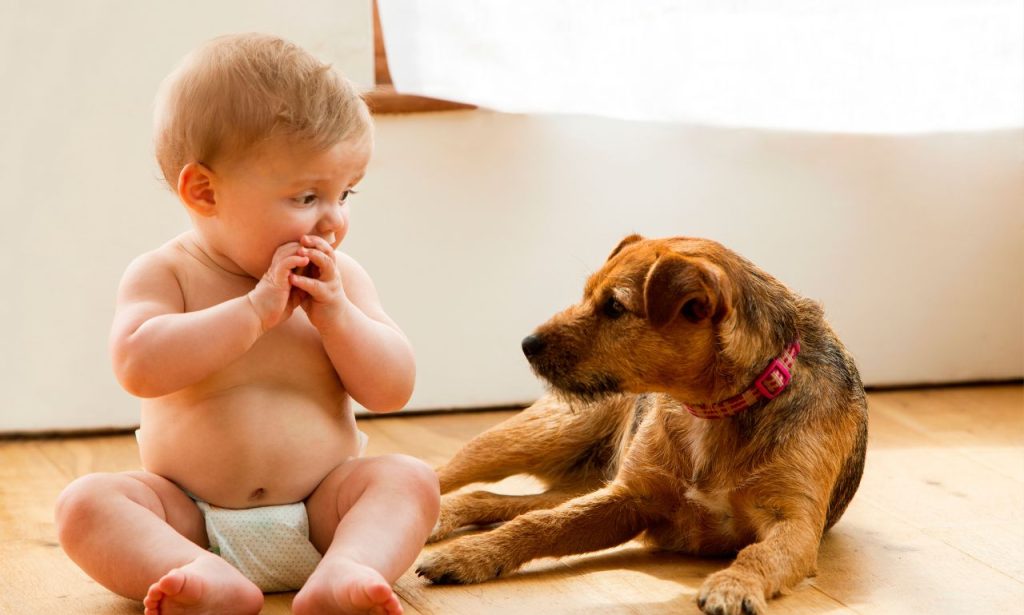
The relationship between a child and a pet doesn’t develop overnight.
Like any friendship, it grows through positive experiences over time.
Safe Introduction Techniques for Dogs, Cats, and Newborns
The first meeting should be calm, controlled, and free from pressure.
Many parents expect a magical moment. Reality is usually less dramatic.
A dog may sniff the baby’s blanket and walk away. A cat might observe from across the room before deciding whether to investigate.
Both reactions are perfectly normal.
Allow your pet to approach at their own pace. Reward calm behavior and avoid forcing interactions.
Patience often produces the best results.
When to Seek Help From a Veterinarian or Animal Behavior Specialist
Most adjustment issues improve with time.
Occasionally, professional guidance becomes necessary.
Aggression, severe anxiety, persistent fear, or dramatic behavioral changes should never be ignored. Early intervention is often the fastest path to a solution.
Veterinarians can rule out medical conditions that may contribute to unusual behavior. Certified animal behaviorists can develop customized plans tailored to your pet’s needs.
Asking for help isn’t a sign that you’ve failed as a pet owner. In many cases, it’s the most responsible decision you can make.
Conclusion
So, can pets get jealous of New Babies? Many pets display behaviors that certainly look like jealousy. More often, though, they’re reacting to sudden changes in attention, routine, and their environment.
The important thing to remember is that your pet isn’t trying to compete with your child. They’re simply adjusting to a new reality.
With patience, preparation, and consistent reassurance, most pets settle into their new role beautifully.
Years from now, you may find your dog patiently walking beside your toddler or your cat curling up next to your child during story time. Those bonds often become some of the most treasured memories families create together.
Sometimes a pet needs a little time to realize that the newest family member isn’t replacing them—they’re simply becoming part of the pack.
Also Read: How Do You Stop Excitement Peeing in Dogs?
FAQs
Cats may appear jealous, but their behavior is often linked to stress, anxiety, or changes in their environment.
Most pets adjust within a few weeks to several months, depending on their personality and previous experiences.
Common signs include clinginess, hiding, excessive vocalization, destructive behavior, or changes in eating and bathroom habits.
Leave a Reply