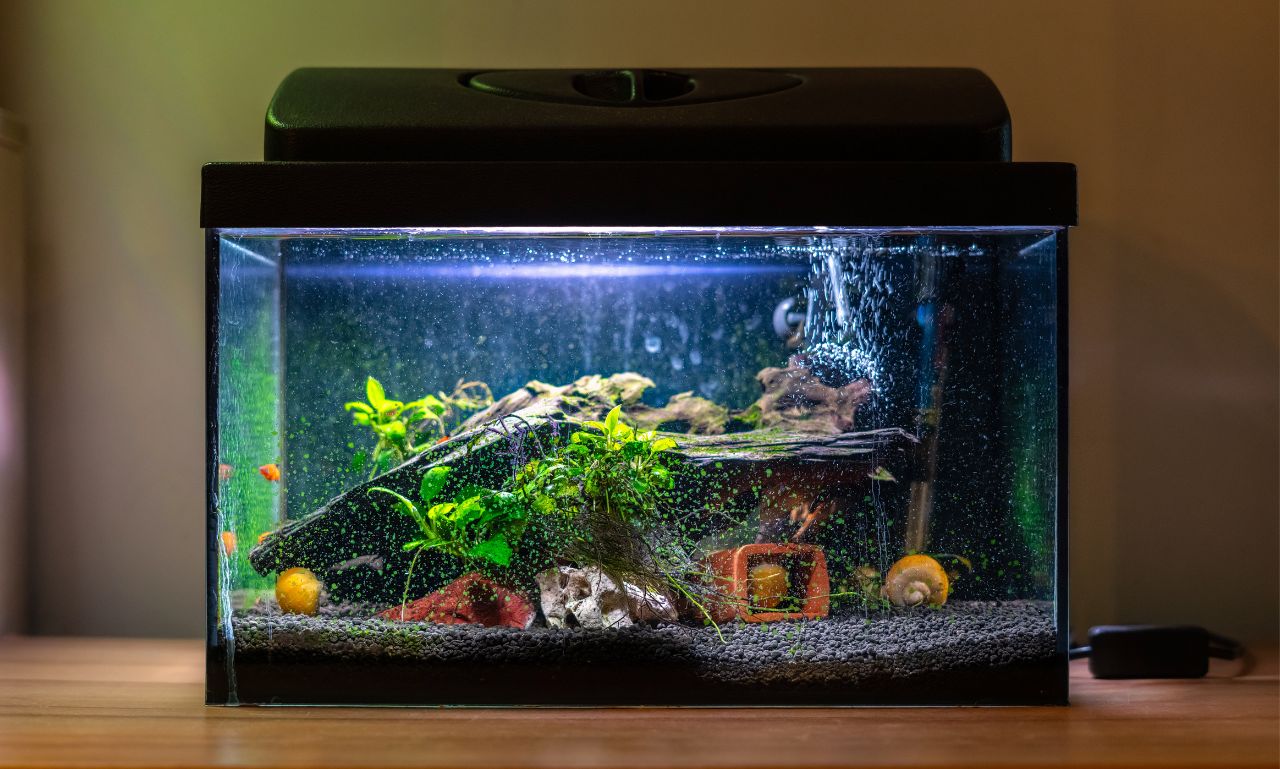
You spend an hour cleaning your fish tank, vacuuming the gravel, wiping the glass, and changing the water. Then you step back, expecting crystal-clear water, only to find the aquarium looking cloudy. Frustrating, right?
If you’ve ever stared at your tank and wondered, “Why Is My Fish Tank Cloudy After Cleaning?“, you’re definitely not alone. It’s one of the most common concerns among aquarium owners, from beginners setting up their first tank to seasoned hobbyists with years of experience.
The good news is that cloudy water after cleaning isn’t always a disaster. In many cases, it’s simply your aquarium adjusting to the changes you’ve made. Fish tanks are living ecosystems, and even a routine cleaning can temporarily throw things out of balance.
Understanding what’s happening inside the tank can save you a lot of stress and prevent mistakes that may make the situation worse. Let’s look at why your water turns cloudy after cleaning, what different types of cloudiness mean, and how you can get your aquarium looking clear again.
What Happens to the Aquarium Ecosystem During Cleaning?
Most people think cleaning a fish tank is all about removing dirt and making the water look better. While that’s partly true, there’s much more going on beneath the surface.
Your aquarium is home to millions of beneficial bacteria that live on the gravel, decorations, plants, and filter media. These microscopic organisms work around the clock to break down fish waste and harmful toxins. Without them, your fish wouldn’t survive for long.
When you perform a deep cleaning, some of those bacteria can be disturbed. Vacuuming the substrate stirs up trapped debris. Scrubbing decorations releases particles that have settled over time. Even cleaning the filter too thoroughly can remove some of the bacteria that help maintain water quality.
Think about shaking a dusty carpet. The dirt doesn’t disappear instantly—it floats around before eventually settling. The same thing happens inside your aquarium. Once debris becomes suspended in the water column, the tank can appear cloudy for a short period.
Is Cloudy Water After Cleaning Normal or a Sign of a Problem?
In many situations, cloudy water after cleaning is completely normal.
A slight haze that appears after a water change or gravel vacuuming often clears within a day or two. During that time, your filtration system removes floating particles while beneficial bacteria re-establish themselves.
However, not all cloudiness should be ignored.
If the water remains murky for several days, becomes increasingly cloudy, or is accompanied by unusual fish behavior, there may be an underlying issue. Fish gasping at the surface, hiding constantly, or showing signs of stress can indicate poor water quality.
A simple question to ask yourself is this: Is the tank improving each day or getting worse? If clarity gradually returns, patience is usually the best solution. If conditions continue to decline, it’s time to investigate further.
Common Causes of Cloudy Fish Tank Water After Cleaning
Bacterial Blooms and Beneficial Bacteria Disruption
One of the most common answers to “Why Is My Fish Tank Cloudy After Cleaning?” is a bacterial bloom.
When populations of beneficial bacteria are disturbed, free-floating bacteria can multiply rapidly in the water. As their numbers increase, the aquarium develops a white or milky appearance.
Many aquarium store owners see this issue regularly. New tank owners often assume something is seriously wrong, but bacterial blooms are usually part of the tank’s natural recovery process.
It’s a bit like a construction crew showing up after road repairs. Things may look messy for a while, but the goal is to restore order.
In most cases, bacterial blooms disappear naturally once the biological balance returns. Constantly changing water during this phase can sometimes prolong the problem by repeatedly disrupting the recovery process.
Disturbed Substrate, Debris, and Filter Media Issues
Another common cause of cloudy water is disturbed substrate.
Over time, gravel and sand collect fish waste, leftover food, plant debris, and other organic matter. Cleaning stirs these particles into the water, creating a cloudy appearance that may last several hours or even a couple of days.
Filters can also contribute to the problem. Many beginners replace all their filter media at once, believing they’re doing the tank a favor. Unfortunately, this removes large amounts of beneficial bacteria and weakens the biological filtration system.
Experienced aquarists often gently clean filter media with old aquarium water rather than tap water. This helps remove excess debris while preserving the bacterial colonies that keep the tank healthy.
Different Types of Cloudy Aquarium Water and What They Mean
White, Gray, or Milky Water After Cleaning
The color of the cloudiness can reveal a lot about what’s happening inside the aquarium.
White or milky water is often linked to bacterial blooms. It usually appears evenly throughout the tank and can seem to develop overnight.
Gray cloudiness is commonly caused by fine particles suspended in the water. New gravel, decorative sand, or recently disturbed substrate are often responsible.
Fortunately, these types of cloudiness are usually temporary. Given enough time and proper filtration, they often resolve on their own.
Green, Brown, or Yellow-Tinted Cloudiness Explained
Not every cloudy tank looks white.
Free-floating algae typically cause green water. Excess light exposure, overfeeding, and elevated nutrient levels create ideal conditions for algae blooms.
Brown water often comes from driftwood releasing tannins. While the tea-colored appearance may look concerning, tannins are generally harmless and can even benefit certain fish species.
Yellowish water usually points to dissolved organic compounds, decomposing plant matter, or accumulated waste. If left unchecked, these substances can affect overall water quality and clarity.
Observing the color of the water gives you valuable clues about the source of the problem and the best way to address it.
How to Clear Cloudy Fish Tank Water Quickly and Safely
Immediate Steps to Improve Water Clarity
When aquarium water turns cloudy, the temptation is to start changing water repeatedly. That’s usually the worst thing you can do.
Instead, allow the filter to do its job. Keep it running continuously and ensure water flow remains strong.
Reducing feeding for a few days can also help. Less food means less waste entering the system, which gives the tank time to recover.
Take a close look around the aquarium as well. Decaying leaves, leftover food, and hidden waste can contribute to cloudiness.
Sometimes the best solution is surprisingly simple: leave the tank alone and let nature catch up.
When Water Changes, Filtration, and Water Testing Are Necessary
There are times when action is needed.
Testing the water should always be part of the troubleshooting process. Ammonia, nitrite, nitrate, and pH levels can reveal whether the cloudiness is linked to a water quality issue.
If ammonia or nitrite levels rise, a moderate water change may be necessary to protect your fish. Most aquarium experts recommend changing about 20 to 30 percent of the water rather than making drastic changes.
Poor filtration can also be a contributing factor. If your filter struggles to keep up with the tank’s size or fish load, upgrading may improve both water clarity and overall health.
How to Prevent Cloudy Water After Future Tank Cleanings
Proper Aquarium Cleaning Techniques for Healthy Water
The best way to deal with cloudy water is to prevent it from happening in the first place.
Avoid cleaning every part of the aquarium at the same time. Spreading maintenance tasks across several sessions helps preserve the biological balance.
When cleaning filters, use old tank water rather than chlorinated tap water. This simple habit protects beneficial bacteria and supports a healthy nitrogen cycle.
It’s also wise to vacuum gravel gently rather than aggressively stirring up the entire substrate bed.
Small, consistent maintenance sessions are often far more effective than occasional deep cleans.
Maintaining Biological Filtration and Long-Term Water Quality
Long-term water clarity comes down to stability.
Healthy bacterial colonies, proper stocking levels, and regular water changes all work together to create a balanced environment. Once that balance is established, your tank becomes much easier to maintain.
Many experienced fish keepers follow a simple philosophy: don’t chase perfection. Focus on consistency instead.
Fish thrive when conditions remain stable, and stable conditions usually lead to clearer water.
Regular testing, responsible feeding, and proper filtration will do far more for your aquarium than frequent deep cleanings ever could.
Conclusion
If you’ve been asking yourself, “Why Is My Fish Tank Cloudy After Cleaning?”, the answer is usually simpler than it seems. Cloudy water often results from disturbed debris, bacterial blooms, or temporary changes in the aquarium’s biological balance.
Most of the time, the problem resolves naturally within a few days. The key is to understand what’s causing the cloudiness and avoid the urge to overreact.
Next time your freshly cleaned aquarium looks less than perfect, give it a little time. Your fish tank is a living ecosystem, and sometimes the best thing you can do is let it find its balance again.
Also Read: How Often Should Aquarium Decorations Be Cleaned?
FAQs
In most cases, it clears within 24 to 72 hours, although bacterial blooms may take up to a week to resolve.
Cloudiness itself usually isn’t harmful, but poor water quality that causes it can stress or harm fish.
Avoid immediate repeat cleanings. First, identify the cause and test the water parameters.
A water change can disturb beneficial bacteria, stir debris, or trigger a temporary bacterial bloom.
Leave a Reply