
Most dogs can begin understanding a simple cue within several training sessions, but reliable performance usually takes longer. The real measure of learning is not one successful response at home, but whether your dog can repeat the behavior consistently in different situations.
How Quickly Can Dogs Learn New Commands?

No single training timeline applies to every dog. Some dogs grasp a simple behavior during their first session. Others need several days of practice before the connection becomes clear.
For many basic commands, early understanding can develop within days or a couple of weeks. Reliable responses often take several weeks of consistent practice. A dog may need much longer before responding dependably around distractions.
That distinction matters. If your dog sits correctly five times in the kitchen, it doesn’t necessarily mean the command is fully learned. Move outside where another dog is walking past, and the same cue suddenly becomes much harder.
Training should therefore be measured by reliability, not speed.
How Long Does It Take a Dog to Learn a New Command Such as Sit?
Simple commands can develop surprisingly quickly because they often involve behaviors dogs perform naturally. Sitting is a good example. Your dog already knows how to sit physically. Training teaches the dog to connect that behavior with a particular verbal cue or hand signal.
A dog might make this connection after several successful repetitions. Stronger understanding develops through repeated practice over multiple sessions.
Commands such as sit, down, touch, and paw are often easier because the required action is relatively straightforward. The challenge comes later when owners expect the same response in increasingly distracting environments.
Why Complex Commands Take Longer to Learn
A command becomes harder when it requires several skills at once.
Consider stay. Your dog must understand the requested position, resist moving, tolerate longer periods, and stay in place as you move farther away. Add another dog nearby, and the difficulty rises again.
Recall can be even more demanding. Coming when called inside the house is one task. Leaving an interesting smell, another dog, or a running squirrel requires much greater impulse control.
Complex behaviors are therefore best taught gradually. Breaking them into manageable stages gives the dog a clearer path to success.
What Factors Affect How Fast a Dog Learns a Command?
Learning speed reflects much more than intelligence. Motivation, previous experience, temperament, environment, training quality, and the difficulty of the behavior all influence progress.
A slower learner isn’t necessarily less capable. The dog may need a different reward, clearer communication, or an easier training environment.
How Age, Breed, Temperament, and Experience Affect Learning
Puppies are often enthusiastic learners, but their attention can disappear quickly. Adult dogs may concentrate for longer and sometimes benefit from previous training experience.
Older dogs can also learn new commands. Age alone doesn’t remove a dog’s ability to form new associations. Training may need to account for comfort, mobility, hearing, vision, and energy levels.
Breed characteristics can influence motivation and behavior, but they shouldn’t become rigid expectations. A dog bred for close cooperation with people may approach training differently from one developed for independent work.
Individual temperament matters as much. Food motivation, confidence, curiosity, excitement, and sensitivity can all change how a dog responds to training.
How Distractions and Command Difficulty Influence Progress
Environment can completely change a dog’s apparent understanding.
Imagine teaching down in a quiet living room. Your dog has little competing for attention. Practice the same command in a park filled with people, smells, birds, and other dogs, and you have created a much harder exercise.
Dogs don’t always generalize lessons automatically. They may need to practice familiar behaviors in several locations before understanding that the same cue still applies.
Start somewhere quiet. Once responses become consistent, introduce distractions gradually rather than expecting immediate obedience in the hardest environment.
How Can You Help a Dog Learn New Commands Faster?
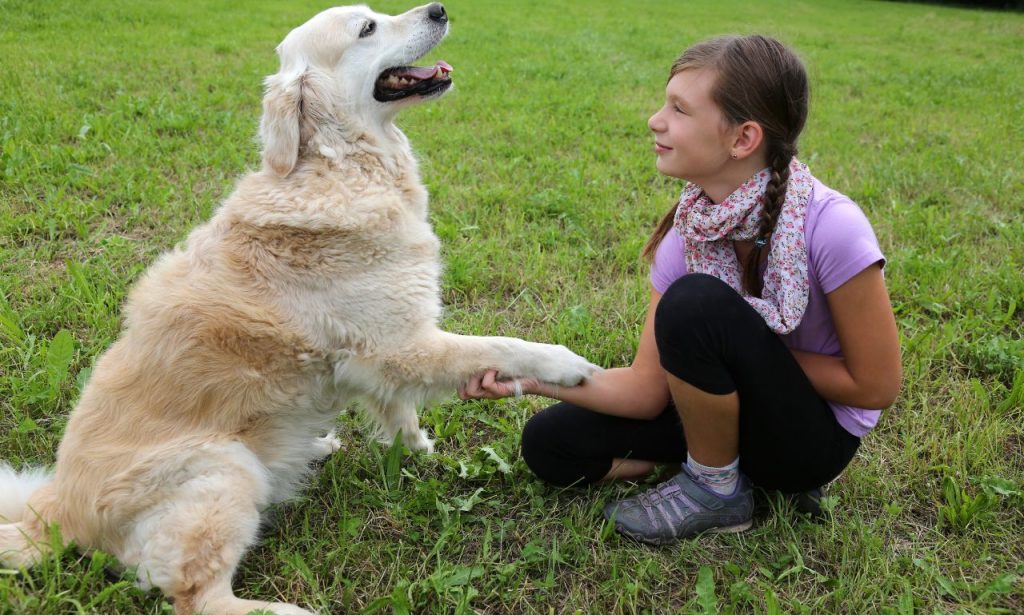
Faster learning rarely comes from squeezing more repetitions into one session. Clear communication and well-timed reinforcement usually matter more.
Training works best when the dog understands which behavior earned the reward.
Using Positive Reinforcement, Rewards, and Clear Cues
Positive reinforcement adds something the dog values after a desired behavior. Food is convenient, but toys, praise, play, and access to enjoyable activities can also work.
Timing matters. Reward your dog soon after the correct behavior so the connection remains clear.
A marker word such as “yes” can help you identify the exact moment your dog succeeds. A clicker can serve a similar purpose. Consistency makes either method easier for the dog to understand.
Keep verbal cues simple as well. If one person says come while another says come here and someone else repeatedly calls the dog’s name, learning becomes less predictable.
Give the cue clearly, allow the dog time to respond, and reinforce success.
Finding the Right Training Session Length and Practice Frequency
Long sessions aren’t automatically better. Dogs can get tired, distracted, frustrated, or bored when practice continues after their concentration fades.
Short sessions often make learning easier. A few productive minutes can accomplish more than a long period filled with unsuccessful repetitions.
Practice can also fit naturally into daily routines. Ask for a sit before opening a door. Practice recall between rooms. Use a down before placing the food bowl on the floor.
These small opportunities help the dog discover that commands aren’t limited to formal training sessions.
How Do Dogs Progress From Learning a Command to Mastering It?
Initial understanding is only one stage of training. Mastery requires the dog to respond consistently despite changes in location, distance, duration, and distraction.
That process explains why a command can appear learned one week and unreliable the next.
How Many Repetitions Does a Dog Need to Remember a Command?
No scientifically useful universal number guarantees learning for every dog and every behavior. Some dogs may show understanding after only a handful of repetitions, while others need considerably more practice.
The quality of those repetitions matters more than chasing a particular number.
Repeatedly saying sit while your dog ignores you isn’t useful practice. It may even weaken the cue’s meaning.
Successful repetitions should be clear and intentional. Give the cue once, allow enough time for a response, mark the correct behavior, and reinforce it.
As the dog improves, practice across several sessions instead of trying to achieve mastery in a single afternoon.
Proofing Commands With Distance, Duration, and Distractions
Proofing teaches a dog that a familiar cue still applies when circumstances change.
Suppose your dog has learned stay. Begin by increasing duration slightly. Once that becomes comfortable, increase your distance. Later, introduce manageable distractions.
Avoid making everything harder simultaneously. Asking for a longer stay while walking farther away in a busy park can create unnecessary failure.
Progress gradually. A dog that succeeds repeatedly builds a much stronger behavioral history than one constantly placed in situations beyond its current ability.
Why Is Your Dog Struggling to Learn a New Command?
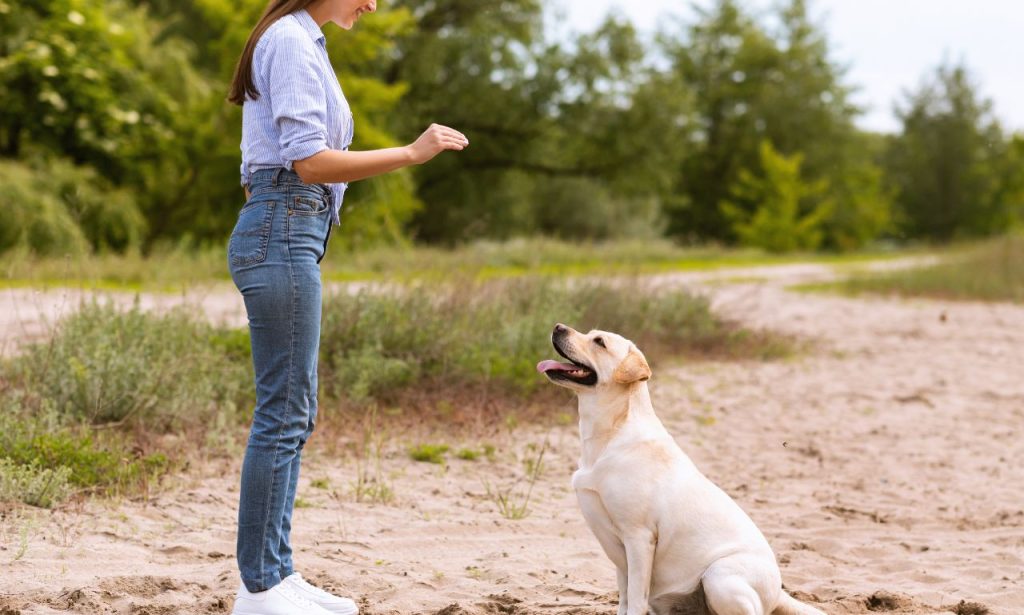
Slow progress doesn’t always mean the dog is stubborn. Often, something in the training setup makes the expected behavior unclear or difficult.
A closer look at the training process can reveal the problem.
Common Training Mistakes That Can Slow Down Learning
Repeating cues is one common issue. If you regularly say come several times before expecting a response, your dog may learn that the first cue carries little meaning.
Poor reward timing can cause similar confusion. A treat delivered several seconds after the desired action may accidentally reinforce whatever the dog did immediately before receiving it.
Training around excessive distractions can also slow progress. So can sessions that continue after the dog loses focus.
Another mistake is advancing too quickly. A dog that has just learned stay for five seconds isn’t ready to remain still while you disappear around a corner.
Good training increases difficulty in small, achievable stages.
When to Adjust Training or Seek Professional Help
If progress stalls, simplify the exercise first. Reduce distractions, shorten the required duration, move closer to your dog, or use a more valuable reward.
You can also break complicated behaviors into smaller parts and teach each component separately.
Professional guidance can be useful when confusion continues despite consistent practice. It is especially valuable when training difficulties involve fear, severe anxiety, aggression, or other significant behavioral concerns.
Choose a qualified professional who uses humane, evidence-informed training methods. Good trainers don’t simply teach commands. They help owners understand why behavior occurs and how the training environment influences it.
Conclusion
So, How Long Does It Take a Dog to Learn a New Command? A dog may understand a simple cue within a few sessions, while reliable performance can take weeks or longer. More demanding behaviors naturally require additional practice.
Rather than measuring progress against another dog, watch for increasing consistency. Clear cues, useful rewards, short practice sessions, and gradual increases in difficulty create stronger learning.
The goal isn’t to teach a command in record time. It is to build a response your dog understands well enough to use when it genuinely matters.
FAQs
Training before a regular meal can work well because food rewards may be more valuable. Avoid training when your dog is excessively hungry or distracted.
Yes. Dogs can learn several commands during the same period. Keep each exercise clear so cues and expected behaviors don’t get mixed up.
Yes. Consistent words and signals make training easier to understand. Family members should agree on the cues used for important behaviors.
Yes. Many dogs respond very well to visual cues. Pairing a hand signal with a verbal cue can provide another clear way to communicate.
Leave a Reply