Many cat owners assume that living indoors automatically means less exercise. After all, outdoor cats spend their days climbing fences, chasing insects, and exploring neighborhoods. Indoor cats, on the other hand, seem content lounging on a sunny windowsill for hours.
Yet domestic cats are natural athletes. Even the laziest house cat still carries the instincts of a skilled hunter. The challenge is making sure those instincts have an outlet inside the home.
So, how do indoor cats get enough exercise naturally? The answer lies in understanding feline behavior. Activities such as climbing, scratching, stalking toys, exploring new spaces, and playing with household objects can all contribute to a healthy level of activity. When owners encourage these natural behaviors, indoor cats can remain fit, mentally stimulated, and happy throughout their lives.
Why Exercise Is Essential for Indoor Cats?
Indoor living protects cats from many dangers, including traffic, predators, and disease. However, it also limits opportunities for movement. Without regular activity, both physical and mental health can suffer.
Exercise helps maintain muscle strength, supports healthy joints, and prevents excessive weight gain. Beyond the physical benefits, movement gives cats a way to satisfy instincts that have existed for thousands of years.
A well-exercised cat is often calmer, more confident, and less likely to develop destructive habits around the home.
How Much Exercise Does an Indoor Cat Need Each Day?
Veterinarians generally recommend at least 20 to 30 minutes of active play daily for healthy adult cats. Kittens often need much more because of their high energy levels. Senior cats may prefer shorter sessions spread throughout the day.
The good news is that cats rarely need a long workout. Most felines naturally exercise in short bursts. A few ten-minute play sessions can be more effective than one extended session.
Think about how cats behave in nature. They don’t jog for miles. Instead, they stalk, chase, pounce, climb, and rest before repeating the cycle. Indoor exercise works best when it mirrors this pattern.
Have you ever watched your cat sprint through the house at full speed for no apparent reason? Many owners call these sudden bursts of energy the “zoomies.” While amusing, they also indicate that your cat is finding ways to burn energy naturally.
What Health Problems Can Develop When Indoor Cats Don’t Get Enough Activity?
Lack of exercise can lead to obesity, one of the most common health concerns among indoor cats. According to the Association for Pet Obesity Prevention, excess weight affects a significant portion of companion animals and increases the risk of chronic health conditions.
Extra pounds can place stress on joints, contribute to diabetes, and reduce overall mobility. Some cats also become less active as they gain weight, creating a difficult cycle to break.
Mental health can suffer as well. Bored cats may overgroom, excessively scratch furniture, vocalize more than usual, or display aggressive behavior. In many cases, these actions are not signs of a bad temperament. They are signs of unmet needs.
Natural Ways Indoor Cats Stay Active at Home
Cats don’t need a gym membership to stay fit. Many everyday behaviors provide meaningful exercise when given the opportunity.
Understanding these behaviors helps owners create an environment where movement happens naturally.
How Hunting Instincts Encourage Daily Movement Indoors
Despite thousands of years of domestication, cats remain instinctive hunters. Even a well-fed cat often stalks shadows, insects, toy mice, or moving objects.
This instinct drives a surprising amount of daily activity. A cat tracking a feather wand is engaging muscles, coordination, and focus in much the same way it would while hunting prey outdoors.
Researchers studying feline behavior have found that predatory play satisfies important psychological needs. Chasing, pouncing, and capturing toys can reduce stress while increasing physical activity.
A simple game with a wand toy often provides more exercise than owners realize. Those quick bursts of speed, sudden jumps, and dramatic turns create a full-body workout.
How Climbing, Scratching, Stretching, and Exploring Provide Exercise
Exercise isn’t always about running. Cats naturally move their bodies through climbing, stretching, and exploring.
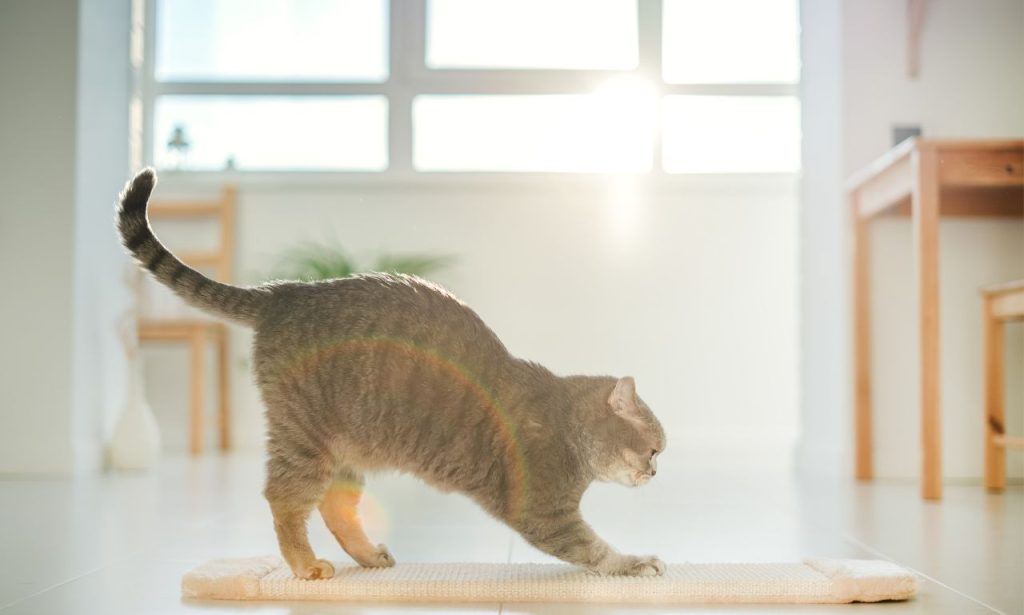
Scratching posts help strengthen muscles in the shoulders and back while maintaining claw health. Stretching after a nap improves flexibility and circulation.
Climbing is especially valuable. In the wild, elevated positions provide safety and observation points. Indoors, bookshelves, cat trees, and window perches satisfy this same instinct.
Exploration also plays a role. Cats enjoy investigating new boxes, rearranged furniture, and unfamiliar scents. Curiosity often motivates movement that owners may not even notice.
How to Create an Indoor Environment That Encourages Natural Exercise
The home environment has a huge impact on activity levels. Small changes can transform a sedentary cat into a much more active one.
Creating opportunities for movement is often easier than many people expect.
Why Cat Trees, Shelves, and Vertical Spaces Keep Cats Moving
One of the biggest mistakes cat owners make is focusing only on floor space. Cats naturally think vertically.
Adding height encourages climbing, jumping, and exploration. Cat trees, wall-mounted shelves, and sturdy window perches create opportunities for movement throughout the day.
Jackson Galaxy, a well-known cat behavior expert, frequently emphasizes the importance of vertical territory. Cats feel safer when they have elevated spaces available, and they naturally use these areas to stay active.
Imagine your home from a cat’s perspective. A living room isn’t just a room. It’s a climbing course filled with opportunities to jump, balance, and observe.
The more vertical options you provide, the more natural movement your cat will engage in.
How Interactive Toys, Puzzle Feeders, and Food Hunts Stimulate Activity
Food can be a powerful motivator for exercise.
Puzzle feeders require cats to work for their meals by batting, rolling, or manipulating objects. This mimics the effort required to find prey.
Food hunts create another layer of enrichment. Instead of placing all food in one bowl, owners can hide small portions around the home. Cats then spend time searching and exploring.
Interactive toys also help maintain interest. Rotating toys every few days prevents boredom and makes old toys feel new again.
Many experienced cat owners notice something surprising. Expensive gadgets often lose their appeal quickly, while a cardboard box or crumpled paper ball remains endlessly fascinating.
Signs Your Indoor Cat May Not Be Getting Enough Exercise
Cats are masters at hiding discomfort. Because of this, inactivity can go unnoticed until obvious problems appear.
Recognizing early warning signs allows owners to make changes before health issues develop.
Behavioral Changes Linked to Boredom and Lack of Stimulation
Boredom frequently shows up through behavior.
Some cats become destructive, scratching furniture or knocking objects off counters. Others vocalize excessively, especially during the night.
Overgrooming is another common sign. A cat may lick certain areas repeatedly, creating bald patches or irritated skin.
In multi-cat households, boredom sometimes leads to tension between pets. Increased chasing, swatting, or territorial disputes can occur when cats lack healthy outlets for energy.
If your cat suddenly develops unusual habits, consider whether physical and mental stimulation might be part of the issue.
Weight Gain, Low Energy, and Other Physical Warning Signs
Physical symptoms often develop gradually.
Weight gain is one of the clearest indicators. Reduced stamina can follow, making a cat less interested in climbing or playing.
You might notice your cat sleeping more than usual or avoiding activities they once enjoyed. Difficulty jumping onto furniture can also signal declining fitness.
A veterinarian can help determine whether these changes stem from inactivity, aging, or an underlying medical condition.
Regular monitoring helps catch problems early and keeps your cat on a healthier path.
Best Daily Habits for Keeping Indoor Cats Active and Healthy
Consistency matters more than perfection. Small daily habits often have a bigger impact than occasional intense play sessions.
The goal is to make activity a natural part of everyday life.
How Play Sessions Mimic Natural Hunting Behavior
Interactive play remains one of the most effective ways to exercise indoor cats.
Feather wands, toy mice, and moving objects trigger stalking and chasing behaviors. A successful play session should resemble a hunt.
Allow your cat to stalk, chase, pounce, and eventually “catch” the toy. Ending with a reward or meal can make the experience even more satisfying.
Many cat owners find that evening play sessions reduce nighttime zoomies and improve sleep for everyone in the household.
The next time your cat launches into a dramatic leap after a feather toy, remember that you’re watching thousands of years of hunting instincts in action.
Safe Ways to Add Extra Enrichment Through Catios, Harness Walks, and Rotating Activities
Some cats benefit from experiences beyond traditional indoor play.
Catios provide secure outdoor access while protecting cats from common outdoor dangers. These enclosed spaces offer fresh air, new scents, and additional opportunities for movement.
Harness training can also work for certain cats. While not every feline enjoys walks, some adapt surprisingly well with patience and positive reinforcement.
Rotating activities helps maintain interest over time. Changing toys, rearranging climbing spaces, or introducing new puzzles prevents routines from becoming stale.
A little variety goes a long way. Much like people, cats appreciate occasional changes that challenge both body and mind.
Conclusion
How Do Indoor Cats Get Enough Exercise Naturally? The answer starts with understanding feline instincts. Cats are designed to hunt, climb, scratch, explore, and observe their surroundings. When indoor environments support these natural behaviors, exercise becomes part of everyday life.
Simple additions such as cat trees, puzzle feeders, interactive toys, and vertical spaces can dramatically improve activity levels. Combined with regular play sessions and mental stimulation, these tools help indoor cats stay healthy and engaged.
Take a moment to look around your home from your cat’s perspective. Is there room to climb, explore, and play? Small changes today can lead to a happier, healthier companion for years to come.
Also Read: Why Do Cats Suddenly Zoom Around the House at Night?
FAQs
Most cats benefit from two or three play sessions daily, totaling about 20 to 30 minutes.
Yes. Indoor cats can live healthy lives when they receive enough exercise, enrichment, and veterinary care.
Cat trees help, but they work best when combined with interactive play and opportunities for exploration.
These bursts of energy, often called zoomies, help cats release pent-up energy and stay active.
5. What is the best toy for indoor cat exercise?
Wand toys are among the most effective because they mimic natural hunting behavior.
Leave a Reply